Meta description: Florida solar EPCs lose thousands when inspections fail. Stop resetting the clock with solar workflow automation built for real AHJs.
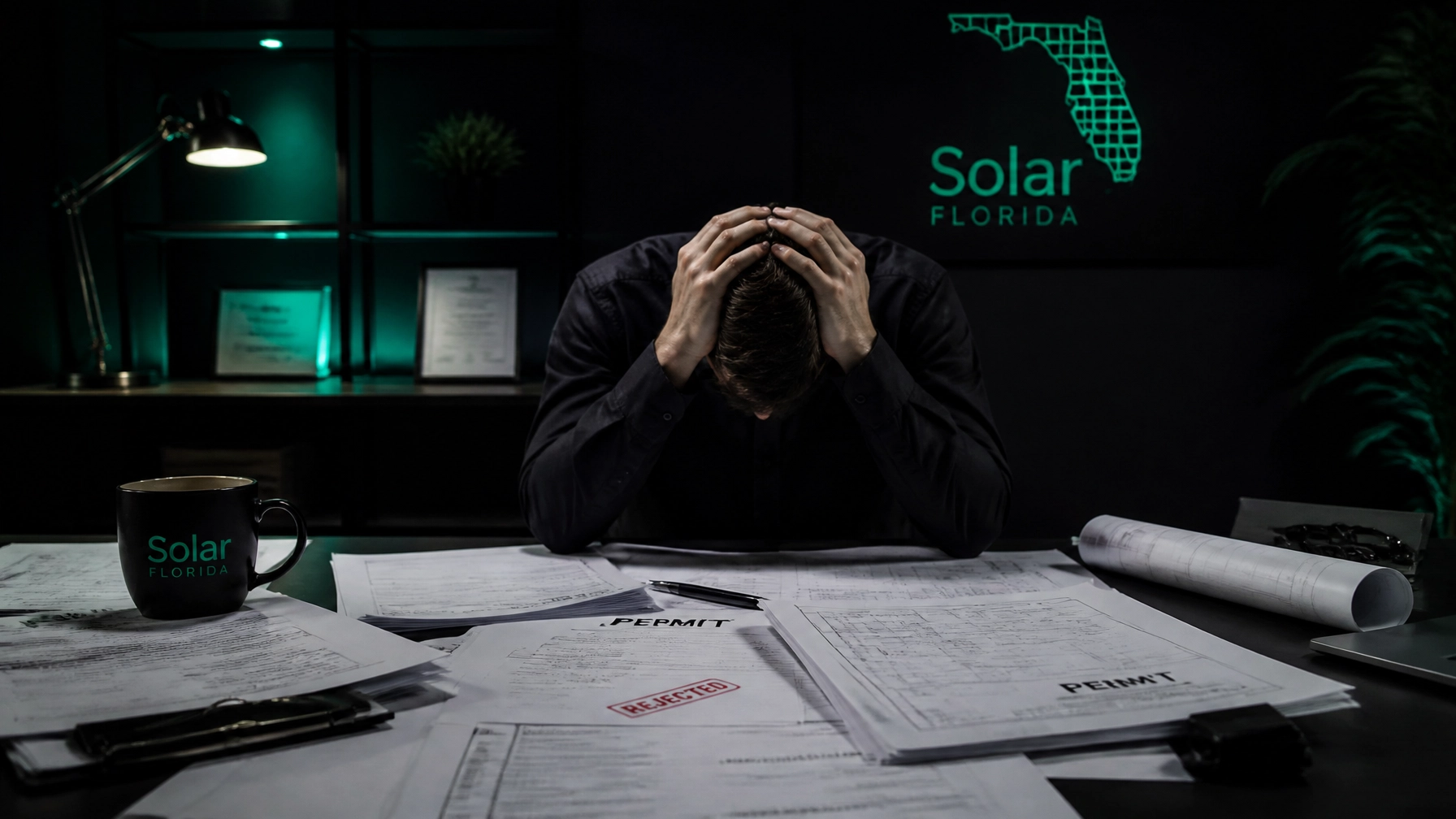
You finally got the permit. It took weeks of back-and-forth with a stubborn city official, but the "Approved" stamp is finally on your plans. You schedule the crew, the panels go up, and the job looks clean. You’re already thinking about the next install.
Then the inspection happens.
The inspector walks the site for ten minutes, finds one missing label or a smoke alarm that isn't interconnected inside the house, and leaves a "Failed" notice on the door. Just like that, your project clock resets.
For a Florida solar EPC owner, this is the "AHJ Trap." It’s the gap between thinking a job is done and actually getting Permission to Operate (PTO). When you’re doing 5 to 30 installs a month, these resets don’t just delay one job: they create a pileup that can stall your entire business.
The Florida Inspection Reality: It’s More Than Just Solar
In Florida, passing an inspection isn't just about whether the panels are straight or the inverter is wired correctly. Because of the state's unique building codes and the decentralized nature of its Authority Having Jurisdictions (AHJs), the fail points are often things that have nothing to do with the PV system itself.
Common reasons for inspection failure in Florida include:
- Plan Set Mismatches: If your crew swapped a 400W panel for a 405W because of a supply chain issue but didn't update the stamped plans, it’s an automatic fail in many jurisdictions.
- Labeling and Identification: Missing NEC-required labels on DC disconnects or rapid shutdown switches is the "low-hanging fruit" for inspectors.
- Life-Safety Items: Florida inspectors often check smoke and carbon monoxide alarms. If the homeowner hasn't updated their 10-year-old alarms, your solar project fails.
- Conduit Aesthetics: Some Florida AHJs require EMT or PVC to be painted to match the house. If the crew forgets the spray paint, the clock resets.
Every time an inspector walks away from a failed site, you lose money. You have to pay for a re-inspection fee, schedule a crew to go back out for a "truck roll" that generates zero new revenue, and explain to a frustrated homeowner why their system is still turned off.

The Hidden Cost of Manual Management
When you’re managing these projects manually: using spreadsheets, sticky notes, or a solar project management software that your team hasn't fully adopted: the inspection phase becomes a black hole.
Without a designed system, you are likely:
- Calling crews to ask if the inspection passed.
- Chasing homeowners to make sure someone is home for the inspector.
- Digging through emails to find the correction notice.
- Losing 2–3 weeks of "float time" because nobody realized the re-inspection wasn't scheduled.
This is where the hidden cost of running solar operations manually hits your bottom line. If you are the owner and you’re the one making these calls, you aren't growing your business; you’re just a highly paid administrator.
The Designed Capability: A System Built for Florida
At GridReady, we don’t just sell you a piece of solar installation software and wish you luck. We deploy a "designed capability": a pre-built operational machine tailored specifically for the Florida residential solar market.
This system was built and proven inside a live Florida solar EPC. It wasn't designed in a vacuum; it was forged in the heat of managing real Florida AHJs and real utility companies.
The system is built on two core pillars: JobTread for project management and DATAx for AI-powered coordination. It is designed to handle the entire job lifecycle, ensuring that the "AHJ Trap" never catches you off guard.
How the System Manages the Inspection Gap
Our system doesn't just store files; it coordinates, tracks, and prompts action. Here is how it's built to handle the post-install phase:
- Automated Verification: Before the inspection is even requested, the system prompts the field crew to upload specific photos: labels, conduit runs, and even the smoke alarms. This "pre-flight" check ensures the human who performs the external submission to the AHJ has everything they need to be successful.
- Homeowner Coordination: The system handles the communication. It automatically texts and emails the homeowner to confirm inspection windows, reminding them of the importance of being home and ensuring their pets are secured.
- Real-Time Status Tracking: The moment an inspection status changes, the system updates the project board. If it’s a "Pass," it triggers the utility PTO submission task. If it’s a "Fail," it immediately prompts the operations manager to schedule the correction.

Automation vs. Human Intuition
It is important to understand what this system is and what it isn't. We do not claim fully autonomous external actions. We know that Florida building departments and utility portals are often clunky and require a human touch.
Instead, the GridReady system acts as the "brain" of your operations. It ensures that no job stalls because a human forgot to check a portal. It provides the solar workflow automation that keeps your team focused on high-value tasks while the machine handles the follow-ups and the data entry.
By migrating your company onto this proven platform, you aren't just adding a tool; you are installing a process. This process replaces the manual labor of 3–4 staff positions with a machine that runs 24/7. You can see how this works in detail on our Services page.
Built in the Field, Not a Lab
The reason our solar EPC software setup works is that it’s based on reality. Most generic project management tools are built by software engineers who have never stepped foot on a Florida roof.
Our system was built inside a live Florida EPC, meaning it knows that Duke Energy handles PTO differently than FPL. It knows that a permit in Miami-Dade requires different documentation than one in Orange County.
The capability we provide is designed to give you back your time. When the system handles the document collection, the tracking, and the communication, the owner is no longer the bottleneck. You can finally focus on what matters: growing your company.

Escaping the Trap
The "AHJ Trap" is a symptom of a manual business. When your operations rely on people remembering to do things, you will always be one failed inspection away from a cash flow crisis.
By implementing residential solar project management that is purpose-built for the Florida market, you turn your operations into a predictable machine. You stop chasing jobs and start managing a system.
GridReady delivers a fully built, ready-to-run system in 5–7 business days. We don't just give you the keys; we provide ongoing monthly support to keep the machine optimized as you grow. Whether you are doing 5 installs or 30, the system scales with you, ensuring that "Failed Inspection" is just a brief detour, not a project-killing reset.
If you are tired of being the bottleneck in your own business, it’s time to look at a system that works as hard as you do. Explore our pricing options and see how we can help you reclaim your time and protect your margins.

Leave a Reply