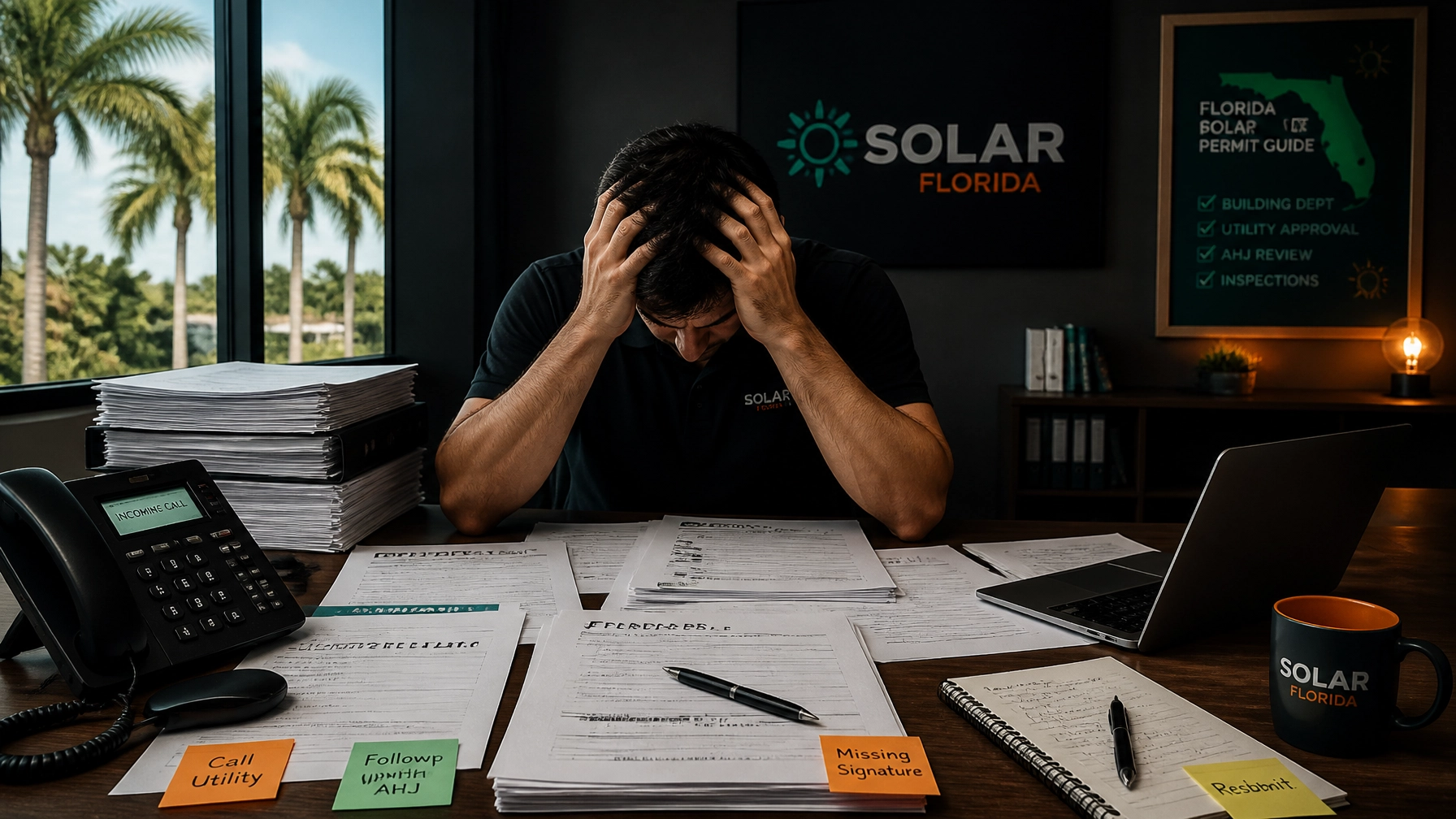
You know the feeling. The sales rep walks into the office with a signed contract and a $50,000 project. Everyone is high-fiving. The customer is excited. They’re finally going to stick it to FPL or Duke Energy and start saving money. For about 48 hours, you are their favorite person on the planet.
Then, the silence starts.
In the world of Florida residential solar, we call this the "Dark Age." It’s that massive, unpredictable gap between the day the homeowner signs the dotted line and the day your crew actually rolls a truck to the site. If you’re like most EPC owners doing 10 or 20 installs a month, this gap is where your referrals go to die.
While you’re back at the office chasing city clerks for permit status and waiting for engineering stamps, your customer is sitting at home wondering if they just got scammed. They have no idea that your county's building department is backed up for weeks or that the utility is dragging its feet on the interconnection agreement. All they know is that they signed a big check and haven't heard a peep.
If you want to scale your solar business without losing your mind: or your reputation: you have to fix the "One-Star Wait."
The Referral Killer: Why Silence is Expensive
Most solar owners focus 90% of their energy on getting the sale and 10% on the installation. But the real "product" you are selling isn't just the panels on the roof; it’s the peace of mind that comes with a professional transition to clean energy.
When a project sits in "permitting purgatory" for 45 days without a proactive update, the homeowner’s excitement turns into anxiety. Anxiety turns into skepticism. And skepticism leads to the three things every Florida EPC owner dreads:
- Cancellations: The longer a job sits, the more time the customer has to listen to their brother-in-law tell them they paid too much.
- Bad Reviews: Even if the installation itself is flawless, a customer who felt ignored for two months will rarely give you a five-star review.
- The Death of Referrals: A happy customer tells two people. A frustrated customer tells ten. If they aren't confident in your process, they won't put their name on the line to recommend you to their neighbors.
A system designed to handle homeowner communication automatically ensures that the "Dark Age" never actually feels dark.

The Florida Reality: Permitting and PTO Bottlenecks
Let’s be honest: Florida isn't the easiest place to do business. We have some of the strictest permitting requirements in the country, and every AHJ (Authority Having Jurisdiction) seems to have its own set of rules.
Before the recent legislative changes like HB 683, it wasn't uncommon for a permit review to take 30 days or more. Even with new rules intended to speed things up, the administrative burden is still on you. If your paperwork isn't perfect on the first submission, you're looking at a kickback that resets the clock.
Then comes the biggest frustration of all: The post-install system-off period.
You’ve finished the build. The panels look great. The inspector signed off. But now, the customer is looking at $30,000 worth of equipment on their roof that isn't doing a single thing because the utility hasn't granted Permission to Operate (PTO).
Every day that passes without PTO is a day the customer is paying both their solar loan and a full electric bill. That’s a recipe for a very angry phone call to your office.

Why "Manual" is the Real Bottleneck
If you are doing 5 installs a month, you can probably keep all this in your head. You know which jobs are at the city and which ones are waiting for interconnection.
But as you scale toward 20 or 30 installs, the wheels start to come off. You find yourself spending four hours a day on the phone with utilities or digging through emails to find a missing document from a homeowner. This manual labor is a hidden cost that eats your margins.
When you rely on a person to remember to send an update, things get missed. When you rely on a manual spreadsheet to track permit expirations, jobs stall.
The solution isn't to hire more office staff: it's to build a machine. A machine built to automate the boring stuff so your team can focus on actually building solar arrays.
Moving from "Chaos" to "Clockwork"
Imagine a world where the second a contract is signed, the system automatically:
- Triggers the engineering request.
- Sends a "Welcome" text to the homeowner with a clear timeline.
- Follows up with the homeowner every Friday with a status update (even if the update is "we're still waiting on the city").
- Assembles the permit package the moment the plans are ready.
- Alerts your team the second a permit is approved so you can schedule the install.
This isn't science fiction. It’s how the most successful EPCs in Florida are operating right now. By using systems designed to bridge the gap between sales and operations, they are cutting their "contract-to-PTO" time by weeks.

Conclusion: Reclaiming Your Time (and Your Reputation)
The "One-Star Wait" is a choice. You can choose to stay the bottleneck in your own business, manually chasing documents and apologizing to frustrated customers. Or, you can choose to implement a system that runs without you.
When you automate the job lifecycle, you aren't just saving money on administrative labor. You are protecting your brand. You are ensuring that every customer gets a five-star experience from the first signature to the final PTO.
And most importantly, you’re getting your life back. Instead of spending your Saturdays worrying about a stalled job in Tampa, you could be enjoying the Florida sun, knowing that your operations are moving forward like clockwork.

Ready to stop being the bottleneck? At GridReady, we build operational systems intended to take the manual weight off your shoulders. We don't just give you a tool; we deliver a fully built, ready-to-run system that handles the lifecycle of your jobs so you don't have to.
Meta Description:
Closing the gap between signing and PTO is critical for Florida solar EPCs. Learn how to fix the "One-Star Wait" and boost referrals with solar business automation.
Leave a Reply